 Padel Court Construction Guide: Everything You Need to Know Before Building a Padel Court
A high-quality padel court is much more than steel structures, tempered glass, and artificial turf. The long-term performance of the court depends largely on one invisible element — the foundation.
Many construction issues such as uneven ball bounce, standing water, cracked concrete, loose anchor bolts, or glass misalignment can often be traced back to poor foundation preparation rather than problems with the court itself.
Whether you are planning a private court, a sports club, or a commercial padel facility, understanding the construction process will help you avoid expensive mistakes and ensure decades of reliable performance.
Before any construction begins, the installation area should be carefully evaluated.
Important factors include:
If the site contains unstable soil, additional excavation and compaction may be required before pouring the concrete base.
Once the location has been confirmed, contractors begin preparing the site.
Typical preparation includes:
Proper compaction is critical because the entire weight of the court—including the steel frame, tempered glass, lighting system, and players—will be transferred into the ground through the foundation.
For most permanent outdoor padel courts, reinforced concrete remains the preferred foundation solution.
A properly designed concrete slab provides:
Typical construction includes:
The finished slab must be completely level while still incorporating a slight gradient that allows rainwater to drain efficiently.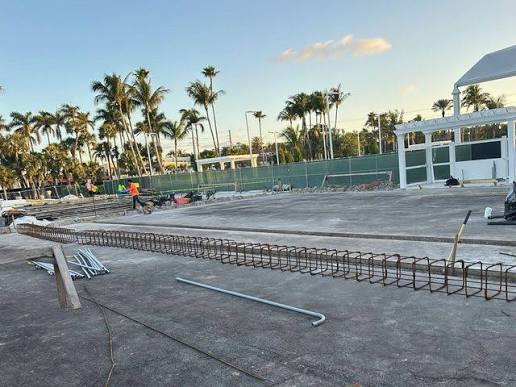
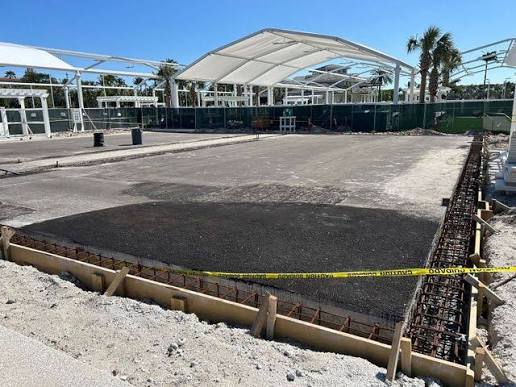
Drainage is one of the most overlooked parts of padel court construction.
Without proper drainage:
Depending on local rainfall, drainage may include:
A well-designed drainage system helps keep the court playable throughout the year.
Even small deviations in the foundation can create major installation problems.
Professional installers typically verify:
High precision allows every steel component and tempered glass panel to fit correctly without unnecessary stress on the structure.
After the concrete has fully cured, installation begins.
Typical sequence:
A professional installation team can usually complete the court within several days once the foundation is ready.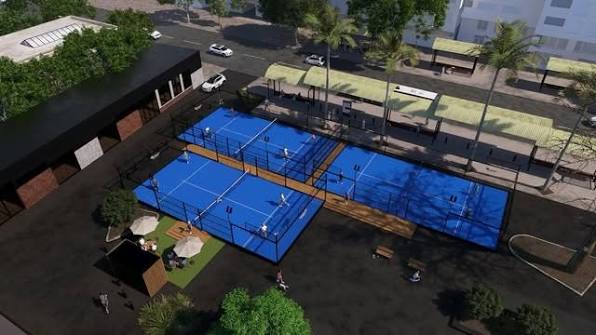
Many expensive repairs originate from avoidable construction errors.
Some of the most common include:
This can lead to foundation settlement and uneven playing surfaces.
Standing water shortens turf life and increases maintenance costs.
Weak concrete may crack under long-term structural loads.
Misaligned anchors complicate installation and place unnecessary stress on the steel frame.
Even minor level differences can affect ball bounce and player experience.
Both concrete and asphalt are used in padel court construction, although reinforced concrete is generally preferred for permanent installations because it provides superior structural stability and anchoring performance. Asphalt can reduce initial costs and may be suitable in some regions, but it is more sensitive to deformation under certain conditions. The best choice depends on climate, soil conditions, project budget, and long-term maintenance goals.
A typical outdoor padel court project follows this schedule:
| Construction Stage | Estimated Time |
|---|---|
| Site preparation | 2–5 days |
| Foundation construction | 5–10 days |
| Concrete curing | 21–28 days |
| Court installation | 3–7 days |
| Final inspection | 1 day |
The overall timeline depends on weather, local regulations, and site conditions.
Building a padel court is an investment expected to deliver years of reliable performance. While the visible components—steel structure, tempered glass, artificial turf, and lighting—often receive the most attention, the foundation is what determines the court’s long-term stability, safety, and playing quality.
Choosing experienced engineers, using quality materials, and following professional construction standards will significantly reduce maintenance costs and maximize the lifespan of your padel court.
Whether you are planning a single private court or a multi-court commercial club, investing in a properly engineered foundation is the first step toward a successful project.


